
Pakistan’s major cities are growing quickly, and the way we live is changing with them. Land is becoming more valuable, travel times are increasing, and city infrastructure is under pressure. That is why vertical living modern high-rise apartments and mixed-use towers has become a smart, forward-looking, and practical solution for families, professionals, and investors.
But in 2026 and beyond, the real conversation is not only about building tall. It is about building smart. A high-rise that looks impressive but is expensive to operate, uncomfortable in summers, and difficult to manage will lose its charm over time. This is where sustainable high-rise living stands out as a positive and future-ready choice, because it focuses on long-term comfort, lower running costs, better maintenance, and stronger value retention.
Sustainable high-rise buildings in Pakistan are thoughtfully designed to reduce electricity and water consumption, improve indoor comfort, and support long-term building performance through efficient systems and planned management. They help lower monthly utility costs and protect property value, making vertical living a confident and future-ready lifestyle choice.
What Does “Sustainable High-Rise” Mean in Pakistan?
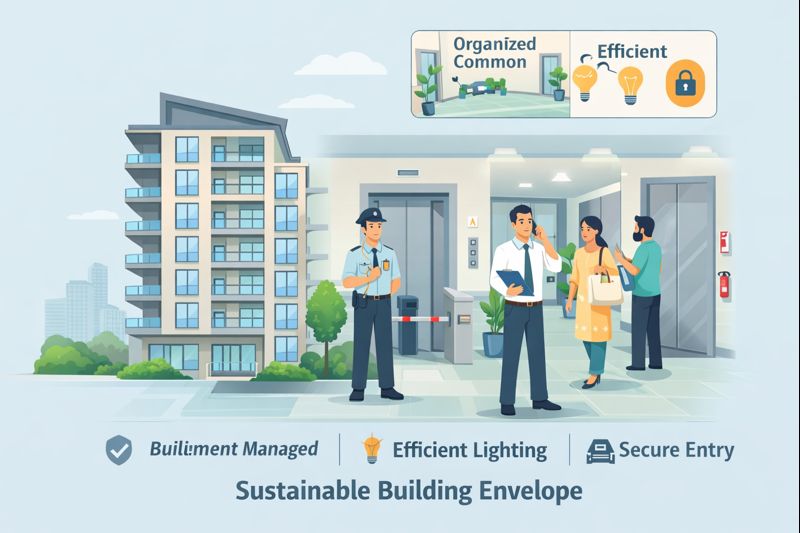
A sustainable high-rise is simply a building that performs better every day. It is planned in a way that reduces unnecessary heat gain, manages water efficiently, and stays organised through proper building operations. In Pakistan, sustainability is not a “luxury idea” or only an environmental trend. It is a practical, people-focused approach that directly affects residents’ monthly bills, everyday comfort, and the building’s long-term maintenance quality.
When a high-rise is designed sustainably, it stays cooler, uses energy more efficiently, and remains easier to maintain as the building ages. This leads to greater peace of mind for residents and fewer long-term compromises for buyers.
Why Sustainable Vertical Living Makes Sense Now
Energy costs and cooling demand are increasing, and our climate makes air-conditioning a major monthly expense. A sustainable high-rise reduces heat entry through better planning, shading, façade discipline, and suitable materials. This reduces the load on cooling systems, which improves daily comfort and delivers noticeable savings, especially during peak summer months.
Water is another major concern. A well-planned high-rise can manage water use more effectively through efficient fixtures, properly designed pumping and storage systems, and practical controls that reduce waste. Over time, this creates a more reliable, stress-free living experience for residents.
Sustainability also strengthens investor confidence. Buyers are becoming more informed, and they now care about operating costs, management quality, and long-term building condition not only the initial price. A building that is efficient and professionally operated often retains its premium appeal for longer, supporting stable resale demand and long-term value.
The Real Secret: A Sustainable Building Envelope
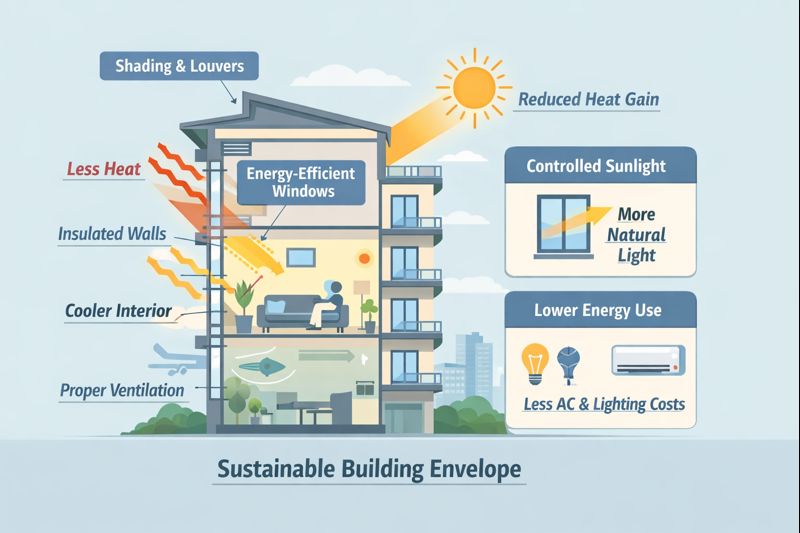
The biggest difference between an average high-rise and a future-ready high-rise is the building envelope—the façade, windows, shading, and the overall “skin” of the building. In simple terms, it controls how much heat enters the building and how comfortable the interior remains.
When windows are planned correctly, shading is used properly, and façade strategy reduces heat gain, apartments feel naturally cooler and more pleasant. This reduces dependency on air-conditioning and improves indoor comfort. In Pakistan, where summers are long and intense, this is one of the most valuable design advantages a high-rise can offer.
Sustainability Is Also About Management and Maintenance
In reality, a high-rise remains “luxury” only if it stays well-managed. That is why sustainability is not only about materials it is also about operations. Waste management planning, organized disposal, disciplined maintenance schedules, and trained facility management teams are what keep a building clean, functional, and welcoming year after year.
A truly sustainable building is one that remains comfortable and well-run even after 5, 10, and 15 years not only during its launch stage.
Mayfair Residencia: Built for Smarter Living, Comfort, and Efficiency
In sustainable high-rise living, it is not only the design and materials that matter—management is a major factor. Even a well-designed tower can lose its value if maintenance is weak or building operations become inconsistent over time. That is why future-ready developments are planned with long-term care, service quality, and operational discipline in mind.
This is also where an international hospitality brand adds meaningful strength. With Hawthorn Suites by Wyndham planned as part of Mayfair Residencia’s vision, the development aligns with a more structured, service-oriented approach to operations. This encourages better maintenance standards, consistency, and a positive resident experience, supporting efficient living and stronger long-term value for both residents and investors.
What Smart Buyers Should Look For
When evaluating any high-rise, buyers should think beyond finishes and marketing. A smart buyer checks whether the project is properly approved, whether planning is professional, and whether operations are clearly defined. The goal is to choose a building that will remain comfortable, reliable, and well-managed not just attractive on day one.
Sustainable high-rises are not simply “green.” They are easier to live in, more affordable to operate, and better for long-term peace of mind. And that is exactly what the future of vertical living in Pakistan looks like.
The Future of Vertical Living in Pakistan
The future belongs to buildings that are not only tall and beautiful, but also efficient, comfortable, and responsibly managed. As cities grow and utility pressures increase, sustainable high-rises will naturally lead the market. They offer lower running costs, stronger resale demand, daily comfort, and lasting confidence everything a modern buyer truly values.
Read More: Why earthquake-safety Important in Real Estate Projects?
FAQs
What is a sustainable high-rise building in Pakistan?
A sustainable high-rise is designed to stay comfortable and efficient in our climate. It reduces heat gain, lowers electricity and water usage, and is planned with proper building operations so the project remains well-managed and valuable for years.
Which feature makes the biggest difference in electricity bills?
The building envelope façade, windows, shading, and overall design has the biggest impact. A strong envelope means lower cooling demand and better indoor comfort.
Is sustainability only about “green” materials?
No. Sustainability is equally about systems and management. Efficient lighting, smart ventilation, fair metering, water planning, and professional maintenance keep a high-rise economical, organised, and premium over time.
Why does building management matter so much in high-rises?
High-rise living depends on shared systems. Strong management keeps costs controlled, spaces clean, and living quality high making the building more enjoyable and better for resale.
How does an international hospitality brand support sustainable vertical living?
International brands typically follow structured service and maintenance standards. In projects like Mayfair Residencia, the planned presence of Hawthorn Suites by Wyndham supports consistent upkeep, better resident experience, and long-term value, reinforcing the same sustainability goals discussed above.